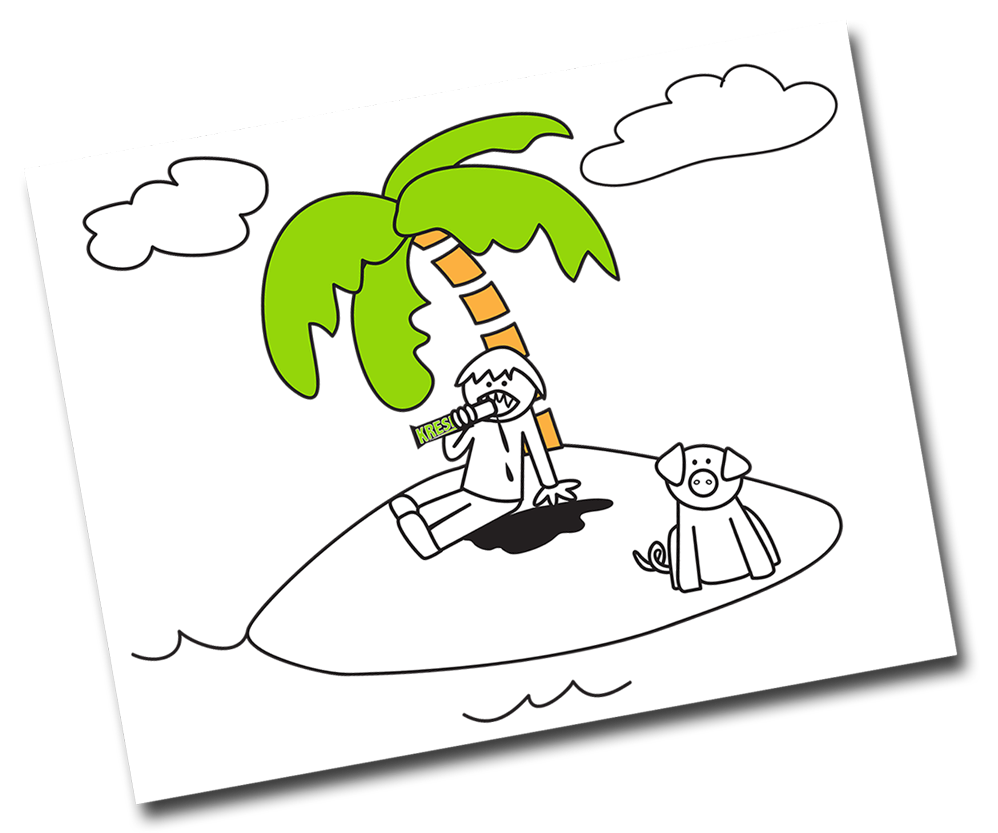
Desert Island? Canines?
We keep being asked about them so thought it only right to respond.
Why no Fairtrade certification or logo?
We assure our customers that the cocoa we sell is sourced from suppliers who have, or could qualify for, Fairtrade certification. However we won't voluntarily pay for a badge from a regulatory body (Fairtrade Australia) that gives approval of fairness to products that aren't vegan.
Renewable energy: why and how?
We aren't necessarily committed to environmental activism for the sake of "saving the planet," (and TBH we don't even know what that means,) just that our vegan sensitivities compel us to be responsible in obtaining power with least negative impact on all Earthlings. We've determined for our case this is through renewables.
Our workshop in Sydney is connected to the generally available electricity distribution network and therefore the actual provenance of the electromotive force driving the electrons flowing through our wires cannot be guaranteed. We do however purchase 100% renewable energy from an accredited supplier which guarantees that the amount of energy we use will be generated by renewable sources and fed into the grid. That means that at the end of the day we are paying for the energy we use to be "green" but it may well be someone else (who is not paying for it) that's actually using it. In a zero sum game it's the same as us using 100% renewable energy.
Why not a compostable wrapper?
We tried, but we couldn't make it happen yet. Our desired action is mitigating the amount of unintended negative consequences our confectionery creates from start to finish and a compostable wrapper seemed like an intuitive way we could further that. But we did the sums, and factoring in the small scale of our operations and a number of technical limitations, the extra miles traveled by the currently uncommon compostable wrappers would have provided negative benefits to our overall consumption. That's not to say we are satisfied with this outcome; we will stay on top of this and adopt the best approach as our operations and the available technology allow.
What about palm oil?
We don't automatically ascribe exceptional value based solely on species, orangutans included. Neither do we automatically assume that palm oil production is worse for the natural environment than the production of other food items, including even those that we might use in our products. (For example, we use Australian cane sugar and cook it to high temperatures; we're not dismissive of the fact that all agriculture and manufacturing has negative consequences to some degree). We realise however that there is a strong sentiment against palm oil amongst many and so we've decided to keep it out of our products in order to keep them relevant to more people. In other words, our decision to leave it out is purely commercial.
Why not organic?
Our take is that while some "organic" foods may have preferable eating qualities to their conventional alternatives this is largely moot for the highly processed ingredients found in our confectionery. Further, it's about poo and dollars; in our own case choosing organic would most likely involve increased hidden deliberate animal inputs and reduced accessibility to a majority of consumers. We will however gladly choose organic based on issues of responsible provenance and we regularly do this with our cocoa; this is decided case-by-case rather than as a core principle and therefore not part of our marketing.
Is our vegan confectionery healthier than nonvegan alternatives?
A call to sensibility: this is confectionery. Like most confectionery ours is loaded with sugar and fat, and we think that getting health opinions from confectioners is probably not the best idea! We do care enough about your health interests to strongly recommend that you please approach suitably qualified personnel for specific advice.
What about common allergens?
We are dedicated to producing goods that avoid violent exploitation; we are not specifically dedicated to various types of food purity. Commensurately we do not perform any tests to check for allergens, nor do we audit our suppliers for their handling of allergens. Please consider that if it's important to you; it's why we don't label our products as being "free from" anything or suitable for those with specific allergies.
Note that our workshop is fully dedicated to vegan products. We certainly don't use animals' milk, their eggs, or their honey but we include a warning for milk as our suppliers may also handle milk products. We currently don't use wheat, peanuts or tree nuts other than almonds in our products but one day we might and they may enter our workshop so we have included those as warnings as well. Currently the only allergens we use are soy and nuts (almonds).
Why the "Kresho" bar?
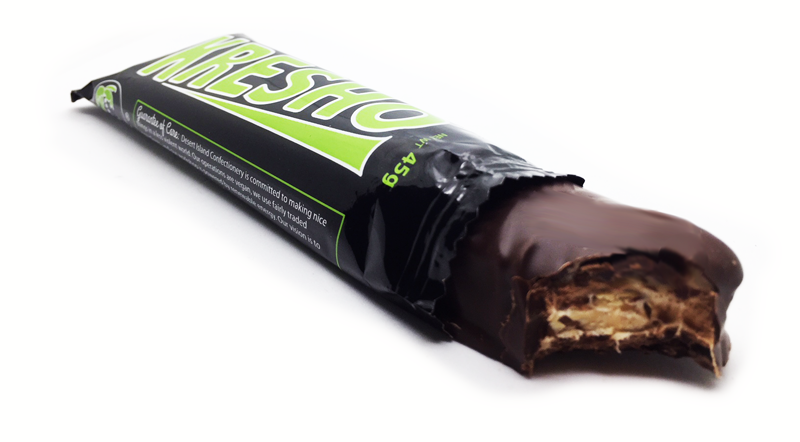
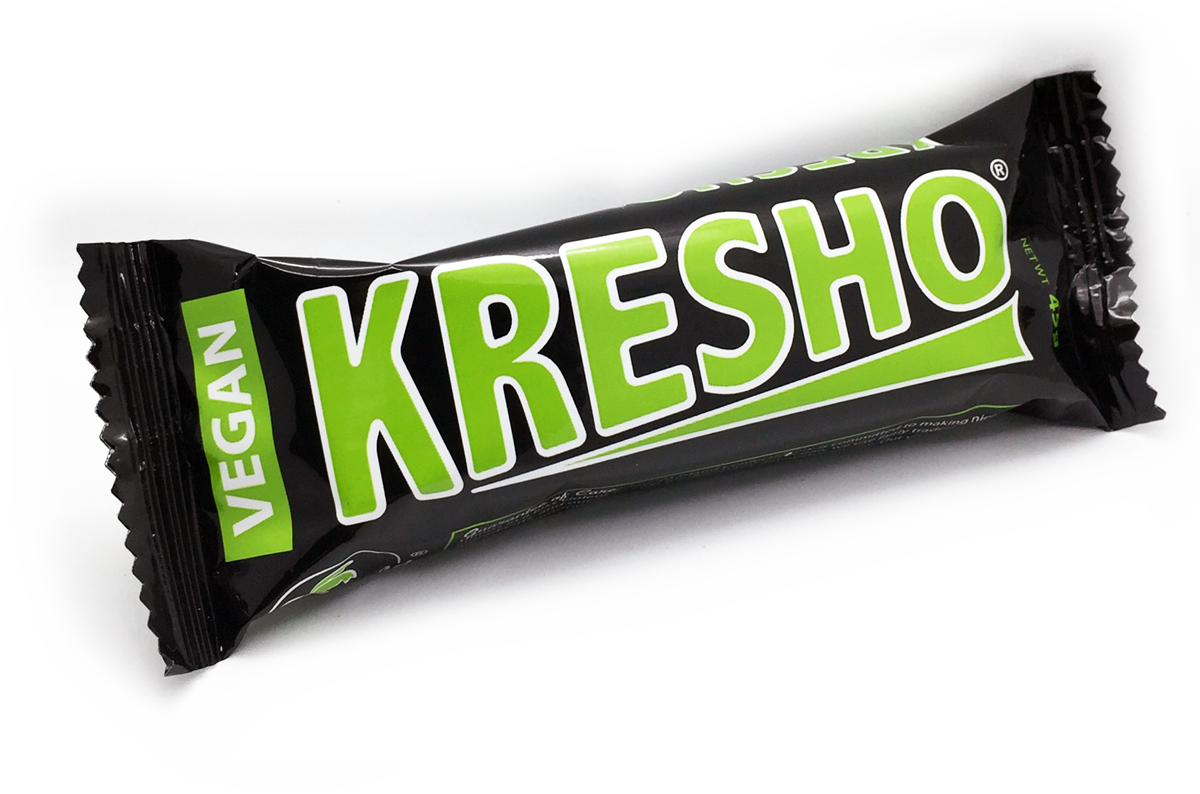
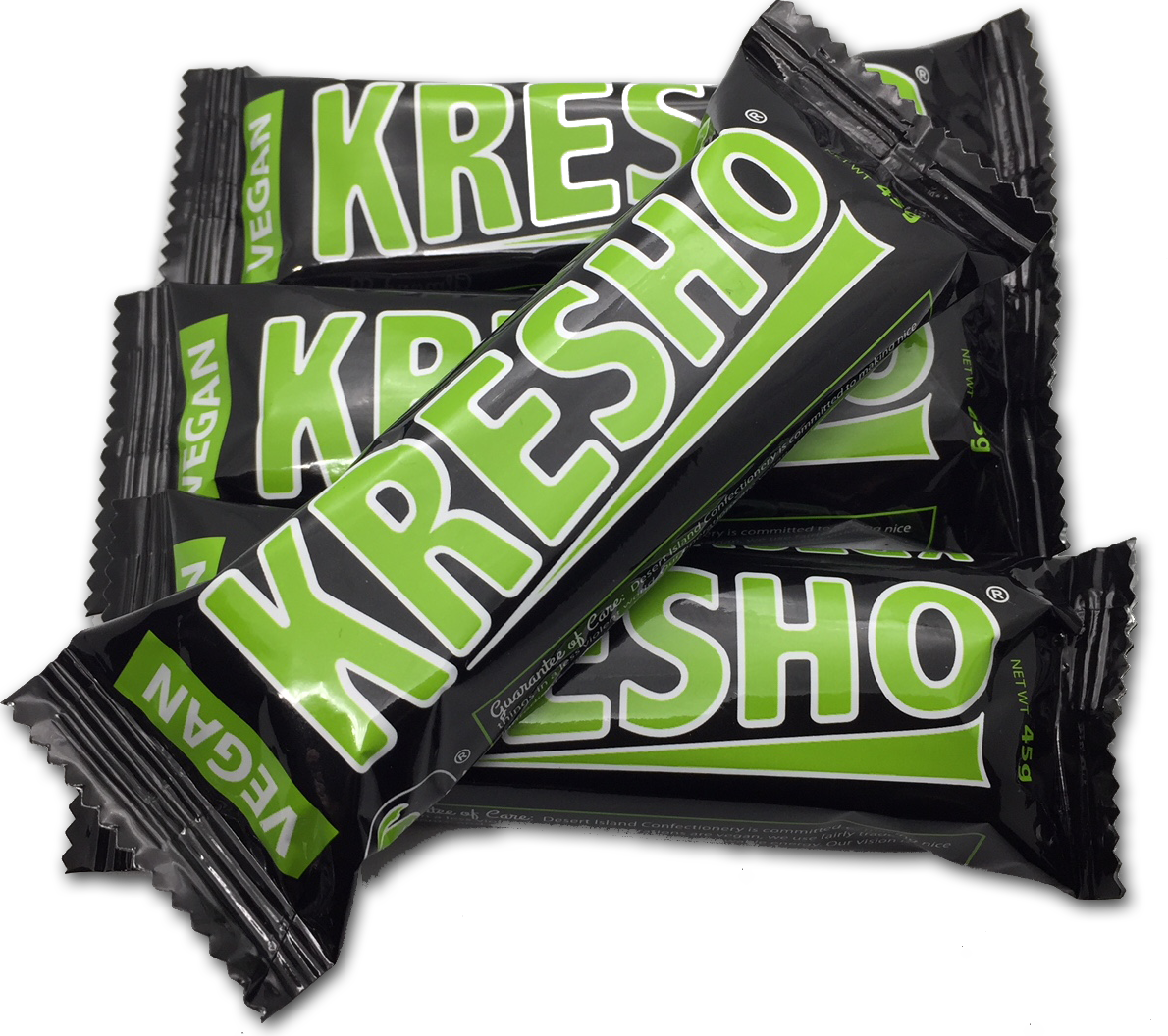
Kresho is the name of the founder. Years before deciding to launch a confectionery workshop he made confectionery bars in the kitchen because he found no vegan alternatives that he was really taken by. (That was before some great products available today.) For lack of a better name his friends would call them "Kresho bars." When it came time to launch Desert Island Confectionery a number of names were suggested for the inaugural product but a resounding response from friends was to simply keep it called the Kresho bar.
Who are our intended customers?
Everyone. We want our products to be desirable not just because they're vegan but also because they're great tasting. We can't compete with "Big Confectionery" but want our products to be largely accessible and have no desire to be a boutique brand; we hope to land somewhere in between. While our products are hand made with vegan love we make no assertions that they're delicately handcrafted by artisinal masters. We're simple, we want to keep our products simple, and we'd rather be found on the bottom shelf in the general confectionery section than at eye level in the "special foods" section.